
- How to Choose Low Maintenance Backyard Ideas for a Tropical Climate in Jamaica
- Assess sun, heavy rainfall, slope, coastal salt exposure, and existing drainage
- Set priorities by comparing upfront cost, durability, and ongoing upkeep
- Which Backyard Surfaces Need the Least Maintenance in Jamaica?
- Compare concrete, permeable pavers, gravel, and raised decks for heat, rain, and slip resistance
- Choose practical edging and ground covers to reduce weeds, mud, and erosion
- What Tropical Plants Make a Jamaican Backyard Easier to Maintain?
- Select locally suitable trees, shrubs, and ground covers for sun, shade, and salt tolerance
- Group plants by water needs and use mulch to limit watering and weeding
- How to Add Comfortable Shade and Seating Without Creating More Upkeep
- Compare pergolas, shade trees, and durable shade sails for storm exposure and maintenance
- Choose weather-resistant seating, fabrics, and outdoor cooking areas for humid conditions
- How to Manage Heavy Rain, Watering, and Mosquitoes in a Jamaican Backyard
- Direct runoff with grading, drains, rain gardens, and rain barrels suited to the site
- Reduce standing water with efficient irrigation, clear drainage routes, and regular checks
- How to Install and Maintain Low-Upkeep Backyard Upgrades in Jamaica
- Plan the work in stages, check permits and utility lines, and hire help for drainage or structural work
- What should I check monthly and seasonally to keep the yard safe and low-maintenance?
- Which upgrades are best for a small backyard or a tight budget?
- How can I prepare backyard features for hurricane-season winds and heavy rain?
- Which plants and materials are most suitable for a coastal Jamaican property?
Low-maintenance backyard ideas for a tropical climate in Jamaica focus on heat-tolerant landscaping and durable outdoor features that reduce watering, upkeep, and time spent on chores. Thoughtful upgrades can help create a cooler, more inviting space that stands up to local conditions and makes it easier to enjoy outdoor living year-round.
How to Choose Low Maintenance Backyard Ideas for a Tropical Climate in Jamaica
The best low maintenance backyard ideas for a tropical climate start with your site, not your wish list. In Jamaica, intense sun, sudden downpours, sloping lots, salt-laden wind, and poor drainage decide which materials and plants will last. Matching upgrades to those conditions prevents the rot, rust, mud, and weeding that make a yard high-maintenance.
Assess sun, heavy rainfall, slope, coastal salt exposure, and existing drainage
Walk your yard at midday and again during or just after a heavy rain. This shows you where heat builds up, where water pools, and where soil washes away. Note what you see before buying anything.
- Sun: Mark areas that get six or more hours of direct sun. Dark paving and bare concrete hold heat, while grass struggles in deep shade under mature trees.
- Rainfall: Look for puddles that last more than a day, muddy patches, and gutters that overflow. These spots become mosquito breeding sites and weed beds.
- Slope: Even a gentle slope sends runoff toward your house or neighbours. Steeper sections need terracing, retaining walls, or dense ground cover to stop erosion.
- Coastal salt exposure: If you are within a few kilometres of the sea, salt spray corrodes ordinary steel fasteners, hinges, and furniture frames. Choose galvanized or stainless hardware and treated or naturally durable timber.
- Existing drainage: Trace where roof water, drains, and yard runoff end up. Blocked or undersized drains should be fixed before any new surface is laid.
A quick sketch of the yard with these zones marked will guide every later decision, from paving to planting.
Set priorities by comparing upfront cost, durability, and ongoing upkeep
Low maintenance rarely means cheapest. A material that costs more at the start often saves money when you factor in repainting, resealing, replacing, and the time you spend on the yard each month. Compare each option on all three measures before committing.
| Option | Upfront Cost | Upkeep Level |
|---|---|---|
| Poured concrete | Moderate | Low; occasional cleaning |
| Untreated timber deck | Low to moderate | High; rot and termites |
| Gravel with edging | Low | Low to moderate; weeding |
| Native shrubs and ground cover | Low | Low once established |
Because budgets are limited, spend first on the parts that are hard to redo: drainage, grading, and structural elements. Cosmetic items such as planters and decor can be added later. Putting money into a solid base and durable surfaces now means fewer repairs after each rainy season.
Rule of thumb: fix water first, choose durable surfaces second, and add plants and furnishings last.
Finally, be honest about your time. If you can spare only an hour or two a week, choose fewer lawn areas, more mulched beds, and surfaces that can be hosed clean.
Which Backyard Surfaces Need the Least Maintenance in Jamaica?
For most Jamaican yards, permeable pavers and well-compacted gravel need the least upkeep, while properly finished concrete is the most durable for high-traffic areas. Once you have assessed your sun exposure, slope, and drainage, the surface you choose will determine how much sweeping, weeding, and repair you face year after year.
Compare concrete, permeable pavers, gravel, and raised decks for heat, rain, and slip resistance
Each surface handles Jamaica's intense sun and sudden downpours differently. Concrete lasts the longest but can run hot and shed water quickly, so it needs a slight slope (about 1:50) away from the house and a broom-brushed finish for grip. Permeable pavers let rain soak through gaps filled with grit, which reduces puddles, but they need a compacted sub-base and occasional joint top-ups. Gravel is cheap and drains well, yet it needs a border and a weed barrier fabric to stay tidy. Raised decks suit sloped or soggy ground, but timber needs sealing and regular checks for termites and rot.
| Surface | Heat and Rain | Upkeep Level |
|---|---|---|
| Concrete | Hot; sheds water fast | Low |
| Permeable pavers | Moderate heat; drains well | Low to moderate |
| Gravel | Stays cooler; drains very well | Low with edging |
| Raised deck | Airflow underneath; slippery when wet | Moderate to high |
Lighter-coloured pavers or a pale concrete finish stay more comfortable underfoot than dark tiles. Avoid polished or glazed finishes outdoors, since algae and rain make them slick. If you want a deck, consider pressure-treated lumber or a concrete platform instead of untreated wood.
Choose practical edging and ground covers to reduce weeds, mud, and erosion
Solid edging and dense ground cover keep soil in place and weeds out, which prevents the muddy patches that heavy rain creates. Use concrete kerbs, treated timber, or steel strip edging to hold gravel and pavers firmly, and set the edging slightly below the surface so mowers can pass over it.
- Lay geotextile fabric under gravel and mulch to suppress weeds without blocking drainage.
- Plant creeping ground covers such as sweet potato vine, wedelia, or dwarf mondo grass on slopes to bind the soil.
- Use a 5 to 8 cm layer of mulch or coarse gravel around beds to limit splashing and moisture loss.
- Build small retaining walls from blocks on steeper sections to slow runoff and stop erosion.
Most of these materials, along with garden tools and edging supplies, are available in one place through the Graham's Hardware home and garden range.
Start with the surface that gets the most foot traffic, such as the patio or path to the clothesline, and finish it properly before extending to lower-use areas. A well-built base now saves far more effort than frequent patching later.
What Tropical Plants Make a Jamaican Backyard Easier to Maintain?
The easiest plants to maintain in Jamaica are hardy, locally adapted species that tolerate heat, heavy rain, and dry spells with little pruning or watering. Once your hard surfaces and edging are in place, planting is where low maintenance backyard ideas for a tropical climate really pay off, because the right choices reduce watering, trimming, and replacement costs year after year.
Select locally suitable trees, shrubs, and ground covers for sun, shade, and salt tolerance
Match each plant to its microclimate first. Full-sun spots, shaded corners, and areas exposed to salt-laden wind each need different species. Plants that already thrive in your parish are usually the safest bet, since they handle local rainfall patterns and soil types without constant feeding.
| Condition | Plant type | Examples |
|---|---|---|
| Full sun | Shrubs and succulents | Bougainvillea, ixora, aloe, agave |
| Partial shade | Foliage and ground cover | Snake plant, peperomia, ferns |
| Coastal salt exposure | Salt-tolerant trees and shrubs | Sea grape, coconut palm, hibiscus, bay cedar |
| Fruit and shade | Trees | Ackee, mango, breadfruit, guinep |
Choose slow-growing or compact varieties near walls, drains, and paving so roots and branches do not cause damage later. Keep large fruit trees well away from the house, and plant them where falling fruit will not create a mess or attract pests on patios. For bare slopes, spreading ground covers such as wedelia, creeping lantana, or sweet potato vine knit the soil together, suppress weeds, and limit erosion during heavy downpours.
Group plants by water needs and use mulch to limit watering and weeding
Grouping plants by water demand, often called hydrozoning, lets you water each area only as much as it needs. Place thirsty plants such as banana or heliconia together near a downspout or low point, and keep drought-tolerant species like aloe, agave, and bougainvillea in a separate dry, sunny bed.
- Plant in the early rainy season so roots establish with natural rainfall.
- Water new plants deeply a few times a week, then taper off as they mature.
- Leave enough space for mature size to avoid constant pruning.
Mulch is the simplest way to cut upkeep. Spread a 5–7 cm layer of coconut husk, wood chips, or dried leaves around plants, keeping it a few centimetres from stems and trunks to prevent rot. Mulch slows evaporation, blocks weed seeds from sprouting, and cushions soil against rain impact. Top it up once or twice a year as it breaks down.
For garden beds, edging materials, and planting supplies to put these ideas into practice, browse the home and garden range at Graham’s Hardware.
Tip: Choose plants that match your site first, then group them by water needs. Fewer exceptions in each bed means less watering, weeding, and replanting.
How to Add Comfortable Shade and Seating Without Creating More Upkeep
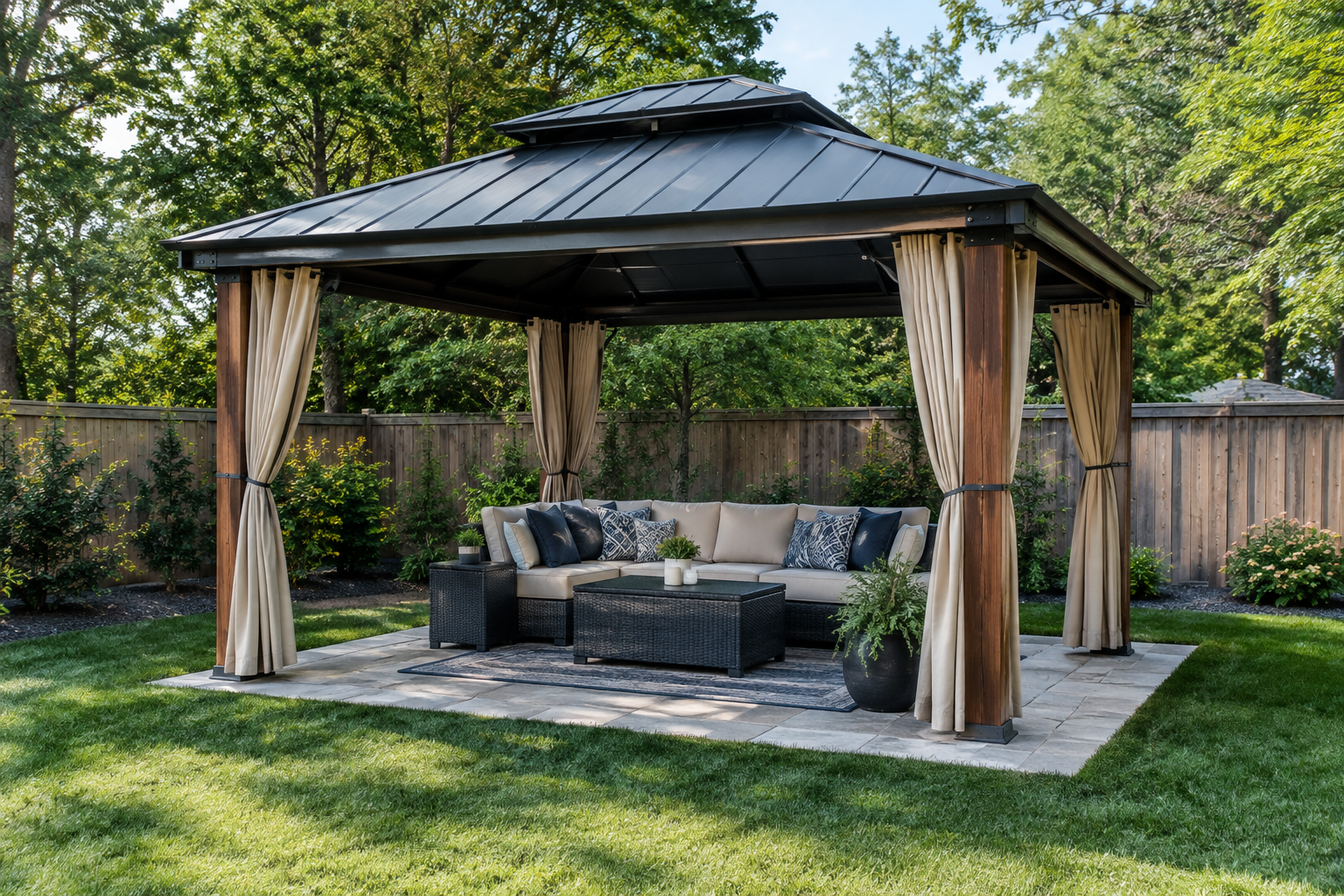
The lowest-upkeep shade in a Jamaican backyard is a mature tree for long-term cooling, or a pressure-treated or metal pergola for fast, permanent cover. Once your plantings are settled, shade and seating are what make the yard usable in the afternoon heat. The goal is to choose structures and furniture that tolerate sun, humidity, salt air, and hurricane-season winds without constant repainting, retightening, or replacing.
Compare pergolas, shade trees, and durable shade sails for storm exposure and maintenance
Each option trades off speed, cost, and storm risk. A tree costs the least and needs almost no upkeep once established, but it takes years to reach useful size. Pergolas and shade sails give shade immediately, but they need sound anchoring and periodic checks.
| Option | Storm exposure | Upkeep level |
|---|---|---|
| Shade tree | Falling limbs if poorly placed | Low, occasional pruning |
| Pergola (treated timber) | Moderate, strong posts needed | Medium, resealing and rot checks |
| Pergola (steel or aluminum) | Good with proper footings | Low, check coatings and rust |
| Shade sail | High, should be taken down | Low, but fabric wears |
Plant trees well away from the house, drains, and utility lines, and favor species with strong wood and non-invasive roots. For a pergola, set posts in concrete footings, use galvanized or stainless fasteners, and treat or seal any timber. Choose steel with a quality protective coating if you live near the coast.
For shade sails, pick UV-stabilized, breathable fabric and stainless hardware, and fix them to solid posts rather than fascia boards. Because sails catch wind like a parachute, plan to release or remove them when a storm is forecast.
Choose weather-resistant seating, fabrics, and outdoor cooking areas for humid conditions
Humidity breeds mildew and rust, so material choice matters more than style. The best seating is built from powder-coated aluminum, recycled plastic lumber, or treated hardwood, and each of these resists rot and needs little more than a wash with mild soap.
Keep these practical points in mind:
- Avoid untreated steel and wicker made with natural fibers, which rust or degrade quickly in damp air.
- Choose solution-dyed acrylic or quick-dry mesh fabrics, and use cushions with open-cell foam that drains fast.
- Store cushions in a ventilated box or indoors during heavy rain periods.
- Built-in masonry or concrete benches never blow away and need almost no care.
For outdoor cooking, a block-and-concrete counter with a tiled or sealed worktop handles moisture far better than timber cabinetry. Place the cooking area on a firm, well-drained slab, downwind of seating, and under a roof or pergola section so rain does not interrupt use. Stainless steel grills and fittings last longest, especially when wiped down after use to prevent salt and grease buildup.
How to Manage Heavy Rain, Watering, and Mosquitoes in a Jamaican Backyard
The most effective low maintenance backyard ideas for a tropical climate start with water control. Move rain away from the house, give it somewhere to soak in, and never let it sit for more than 48 hours. Mosquito eggs hatch in as little as 24 to 48 hours in warm conditions, so drainage and mosquito control are essentially the same job.
Direct runoff with grading, drains, rain gardens, and rain barrels suited to the site
Start with grading. The soil should fall away from the house at roughly 2% (about 1 inch per 4 feet) for the first 6 to 10 feet. Where the ground is flat or slopes toward a wall, add a drainage solution that matches the problem:
- Swales: shallow, grass- or gravel-lined channels that carry runoff to a safe outlet, ideal for gentle slopes.
- French drains: perforated pipe in a gravel-filled trench, suited to soggy low spots and areas beside patios.
- Channel (trench) drains: placed at the edge of slabs and carports to catch sheet flow before it reaches doors.
- Rain gardens: planted depressions 4 to 8 inches deep that hold runoff briefly and let it soak in, best where soil is not heavy clay.
- Rain barrels or tanks: connected to gutters and downpipes to store water for the dry months, fitted with tight lids and fine mesh screens.
On hillside lots, break up long runs of water with terraces or retaining edges so rain slows down and erosion is reduced. In clay-heavy areas, a rain garden may drain too slowly, so a gravel-filled soakaway or a piped outlet is often the better choice. Always send water to a gully, road drain, or lower area on your own land, never onto a neighbour's property.
Reduce standing water with efficient irrigation, clear drainage routes, and regular checks
Drip irrigation or soaker hoses use far less water than sprinklers and keep foliage dry, which discourages fungus and weeds. Put them on a simple timer set for early morning, and switch them off during the rainy season. Grouping plants by water need, as covered earlier, keeps zones simple to manage.
Mosquito prevention comes down to routine checks. After every heavy downpour, walk the yard and look for:
- Blocked gutters, downpipes, and channel drains holding water or leaf litter.
- Low spots, ruts, or sunken pavers where puddles linger.
- Buckets, tarps, plant saucers, old tyres, and containers collecting rain.
- Uncovered barrels, tanks, or cisterns without screens.
- Bromeliad cups and other plants that trap water, which should be flushed weekly.
If water is still standing 48 hours after rain, treat it as a drainage problem to fix, not a puddle to ignore.
Fill depressions with compacted marl or gravel, keep drain grates clear, and trim vegetation so air can move through the yard. If you keep a pond or water feature, add circulation or mosquito-eating fish so the water never stays still.
How to Install and Maintain Low-Upkeep Backyard Upgrades in Jamaica
Plan the work in stages, check permits and utility lines, and hire help for drainage or structural work
The most reliable way to build a low-maintenance backyard is to work in stages: drainage and grading first, hard surfaces and structures second, planting last. Fixing water flow before laying pavers or planting prevents the costly rework that comes from washed-out gravel and waterlogged beds.
- Confirm underground water, electrical, and septic lines with the utility provider or your contractor before digging.
- Check with your parish council or municipal authority on permits for decks, large pergolas, retaining walls, or anything that alters drainage toward a neighbour.
- Hire a qualified mason, engineer, or electrician for retaining walls over knee height, major regrading, drains tied into existing systems, and any structure that must resist wind.
What should I check monthly and seasonally to keep the yard safe and low-maintenance?
A short monthly walk-through catches most problems early. Look for standing water, blocked drains, loose pavers, rusted fasteners, and weeds in joints. Empty any containers holding water, and clear leaves from gutters and channels.
Seasonally, do a heavier check before the rainy months and again before peak hurricane season. Re-top mulch to about 5–8 cm, reseal timber, tighten bolts on pergolas and railings, test irrigation timers, and prune branches that overhang the roof or fence.
Which upgrades are best for a small backyard or a tight budget?
For small or budget yards, put money into drainage, one durable surface, and mulched planting beds. These deliver the biggest drop in upkeep per dollar spent.
- Lay a compact patio of concrete slabs or pavers over compacted gravel instead of paving the whole yard.
- Use gravel paths with solid edging to stop weeds and mud.
- Plant hardy shrubs and ground covers in grouped beds with mulch.
- Choose a single shade solution, such as one tree or a sturdy shade sail, rather than several features.
How can I prepare backyard features for hurricane-season winds and heavy rain?
Preparation means securing what can stay and removing what cannot. Anchor pergola posts into concrete footings, use galvanized or stainless fixings, and take down shade sails and umbrellas when a storm watch is issued.
- Store light furniture, pots, and grill covers indoors or in a secured shed.
- Trim dead or weak branches well before the season, and avoid heavy topping that weakens trees.
- Clear drains, channels, and gutters so runoff moves away from the house.
- Check fence panels and gates for loose posts or corroded hinges.
Which plants and materials are most suitable for a coastal Jamaican property?
Coastal yards need salt-tolerant plants and corrosion-resistant materials. Sea grape, coconut palm, bougainvillea, agave, and seaside ground covers such as beach morning glory handle wind and salt spray well, though newly planted specimens still need watering until established.
For materials, choose concrete, treated or hardwood timber, and hot-dip galvanized or stainless steel hardware. Plain steel fasteners corrode quickly in salt air. Rinse metal furniture and railings with fresh water regularly, and use light-coloured, textured surfaces that stay cooler and resist slipping.

Premium Lumber Supplies
Premium Lumber for Construction in Jamaica
Graham's Hardware carries a full range of treated and untreated lumber for construction, framing, roofing, and carpentry across Jamaica. Available in standard dimensions and custom lengths, with wholesale pricing for contractors and bulk buyers.
Lumber Types
- Pressure-Treated Pine — weather, rot & insect resistant, ideal for outdoor & ground-contact use
- Untreated Pine — for interior framing, furring, and general carpentry
- Hardwood Lumber — mahogany & cedar for doors, windows & fine carpentry
- Structural Beams — for load-bearing walls, floors & commercial builds
Common Dimensions Available
- 2×4, 2×6, 2×8, 2×10, 2×12
- 1×4, 1×6, 1×8 for cladding & finishing
- 4×4, 4×6 posts for structural & fencing use
- Custom lengths available on request
Common Applications
- Wall & roof framing
- Floor joists & decking
- Fencing & gates
- Furniture & cabinetry
- Formwork & shuttering for concrete
Wholesale pricing available for contractors and bulk orders. Island-wide delivery available. Shop at Graham's Hardware.